
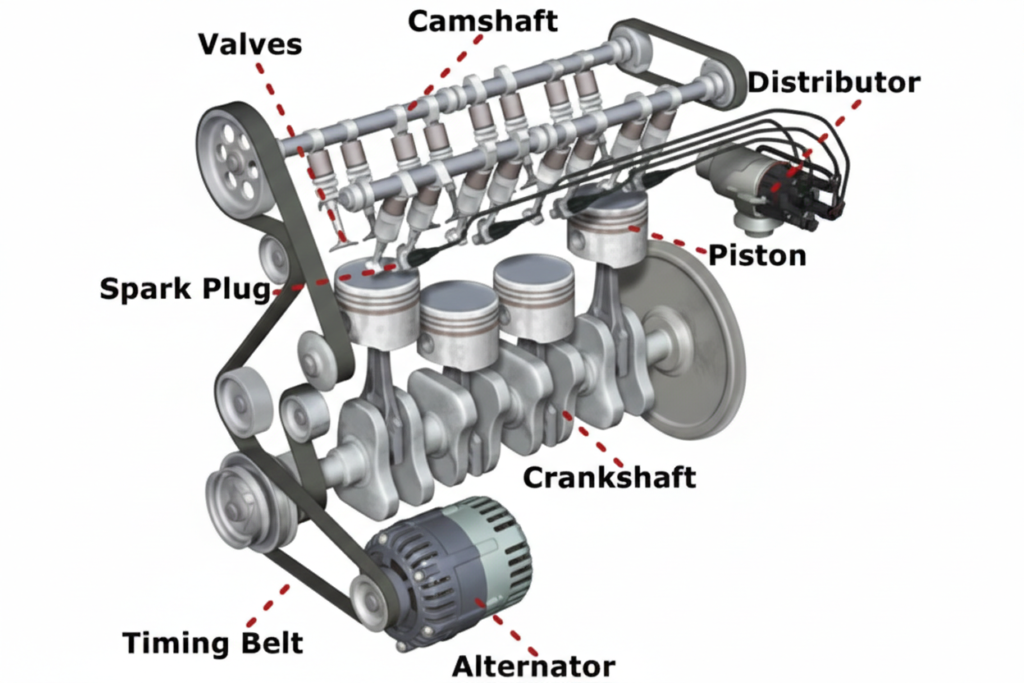
Understanding engine parts is essential for every car owner who wants reliable performance and long-term vehicle health. Your car’s engine is a complex system made up of multiple car engine components working together to generate power, improve fuel efficiency, and ensure smooth driving. Knowing how these parts function, when to maintain them, and when to replace them can save you from costly repairs and unexpected breakdowns.
This in-depth guide explains the key engine parts, their roles, practical engine maintenance tips, and replacement timelines so you can make informed, confident decisions about your vehicle.
What Are Engine Parts and Why They Matter
Engine parts are the mechanical and electrical components inside your car’s engine that enable combustion and power generation. When all parts function correctly, your engine runs efficiently, consumes less fuel, and lasts longer. However, worn or poorly maintained components can lead to reduced performance, higher emissions, and even engine failure.
From spark plugs to pistons and air filters, each part plays a critical role. Understanding these roles helps you detect early warning signs and maintain optimal engine performance.

Major Car Engine Components and Their Functions
Below is a breakdown of essential car engine components and what they do:
| Engine Part | Function | Why It’s Important |
|---|---|---|
| Spark Plugs | Ignite the air-fuel mixture | Ensures smooth combustion and engine start |
| Pistons | Move up and down to generate power | Convert fuel energy into mechanical motion |
| Air Filter | Blocks dust and debris | Protects engine from contamination |
| Fuel Injectors | Deliver fuel to combustion chamber | Maintains fuel efficiency and power |
| Timing Belt | Synchronizes engine valves and pistons | Prevents engine misfiring or damage |
| Oil Filter | Cleans engine oil | Reduces wear and extends engine life |
Each of these engine parts works in coordination. If one component fails, the entire engine’s efficiency can drop significantly.
How Engine Parts Work Together
Your engine operates through a continuous cycle: intake, compression, combustion, and exhaust. During this cycle:
-
Air enters through the air filter
-
Fuel injectors supply the correct fuel ratio
-
Spark plugs ignite the mixture
-
Pistons create motion and power
-
Exhaust gases are expelled safely
This synchronized process highlights why proper engine maintenance tips are vital. A single faulty part can disrupt the entire cycle and cause long-term damage.
Common Signs Your Engine Parts Need Attention
Recognizing early symptoms of worn engine components helps prevent costly repairs. Watch out for:
-
Reduced fuel efficiency
-
Engine misfiring or rough idling
-
Unusual knocking or ticking sounds
-
Excessive exhaust smoke
-
Warning lights on the dashboard
These signs often indicate problems with spark plugs, fuel injectors, or air filters. Addressing them early improves performance and reliability.
Engine Maintenance Tips for Long-Term Performance
Regular maintenance is the key to keeping engine parts in optimal condition. Here are practical tips every car owner should follow:
1. Replace Air Filters Regularly
Clean air filters ensure proper airflow and prevent contaminants from damaging internal components.
2. Monitor Engine Oil and Oil Filters
Oil lubricates moving engine parts and prevents friction. Always replace oil and filters at recommended intervals.
3. Inspect Spark Plugs Periodically
Faulty spark plugs reduce engine efficiency and cause misfires. Routine checks help maintain smooth ignition.
4. Check Belts and Hoses
Worn timing belts or cracked hoses can lead to severe engine damage if ignored.
5. Use Quality Engine Parts
High-quality components enhance durability, improve fuel efficiency, and reduce long-term maintenance costs.
These engine maintenance tips not only improve performance but also extend the lifespan of your vehicle’s engine.
When Should You Replace Engine Parts?
Even with proper maintenance, engine components eventually wear out. Knowing replacement timelines helps you avoid unexpected breakdowns.
| Engine Part | Recommended Replacement Interval |
|---|---|
| Spark Plugs | Every 20,000–30,000 km |
| Air Filter | Every 15,000–20,000 km |
| Fuel Injectors | Every 80,000–100,000 km |
| Timing Belt | Every 60,000–100,000 km |
| Oil Filter | With every oil change |
These timelines may vary depending on driving conditions and vehicle type. For example, city driving with frequent stops may require more frequent maintenance compared to highway driving.

OEM vs Aftermarket Engine Parts: What to Choose?
Choosing the right replacement parts is crucial for engine reliability. There are two main options:
-
OEM Parts (Original Equipment Manufacturer): Designed to match your vehicle’s exact specifications, ensuring high compatibility and reliability.
-
Aftermarket Parts: Often more affordable and widely available, but quality may vary depending on the brand.
For critical car engine components like timing belts or fuel injectors, OEM parts are generally recommended for maximum safety and performance. However, high-quality aftermarket parts can also be a cost-effective solution when sourced from trusted suppliers.
Building Trust Through Preventive Maintenance
A well-maintained engine not only performs better but also enhances resale value and driver confidence. Consistent servicing, using quality parts, and following manufacturer guidelines demonstrate responsible car ownership. Reliable maintenance records also build trust with future buyers or mechanics, showing that your vehicle has been cared for professionally.
By investing in preventive maintenance today, you protect your engine from major repairs tomorrow. This approach reflects a long-term mindset focused on durability, efficiency, and safety.
Keep Your Engine Running at Its Best
If you want your car to deliver consistent performance, it’s essential to use high-quality engine parts and follow proper maintenance schedules. Whether you’re replacing spark plugs, air filters, or timing belts, choosing reliable components ensures smoother driving and fewer mechanical issues.
Explore trusted sources that offer durable car engine components, helpful guidance, and dependable delivery options. Investing in the right parts today will help you avoid costly breakdowns and maintain peak engine efficiency for years to come.
Final Thoughts
Your vehicle’s engine is the heart of its performance, and understanding its components empowers you to maintain it with confidence. From spark plugs to fuel injectors, every element contributes to efficiency, power, and longevity. Following smart engine maintenance tips, monitoring warning signs, and replacing worn parts on time will keep your engine running smoothly and safely.
By staying informed and proactive, you not only protect your investment but also ensure a more reliable and enjoyable driving experience.